This idea of a nonsite as presented in "Rhizomatic Remediation: Adaptation in a Web-Based Art Praxis During Time(s) of Crises" - I like it! It continues with the theme of accessibility that the internet provides. The internet is nowhere and everywhere. I agree that it is the place of culture. The internet determines the success of a lot of these exhibits, particularly during quarantine when there is nowhere else to display them. Pita mentioned in class that galleries and museums in the UK have just opened up this week. People have clearly been creating art this whole time in quarantine, such as the Friendly Ghost exhibit created right at the beginning of quarantine. This proves that using the internet as a gallery space is a sustainable model, and I think this is a model that will continue to be used by galleries even after the world goes back to normal(?). I think the placement in the parking garage is interesting as well. It makes sense in that the space itself is very bland in terms of color. But it still has some structural elements that make it more interesting, its very cubic and three dimensional so I wonder how that affects the artwork.
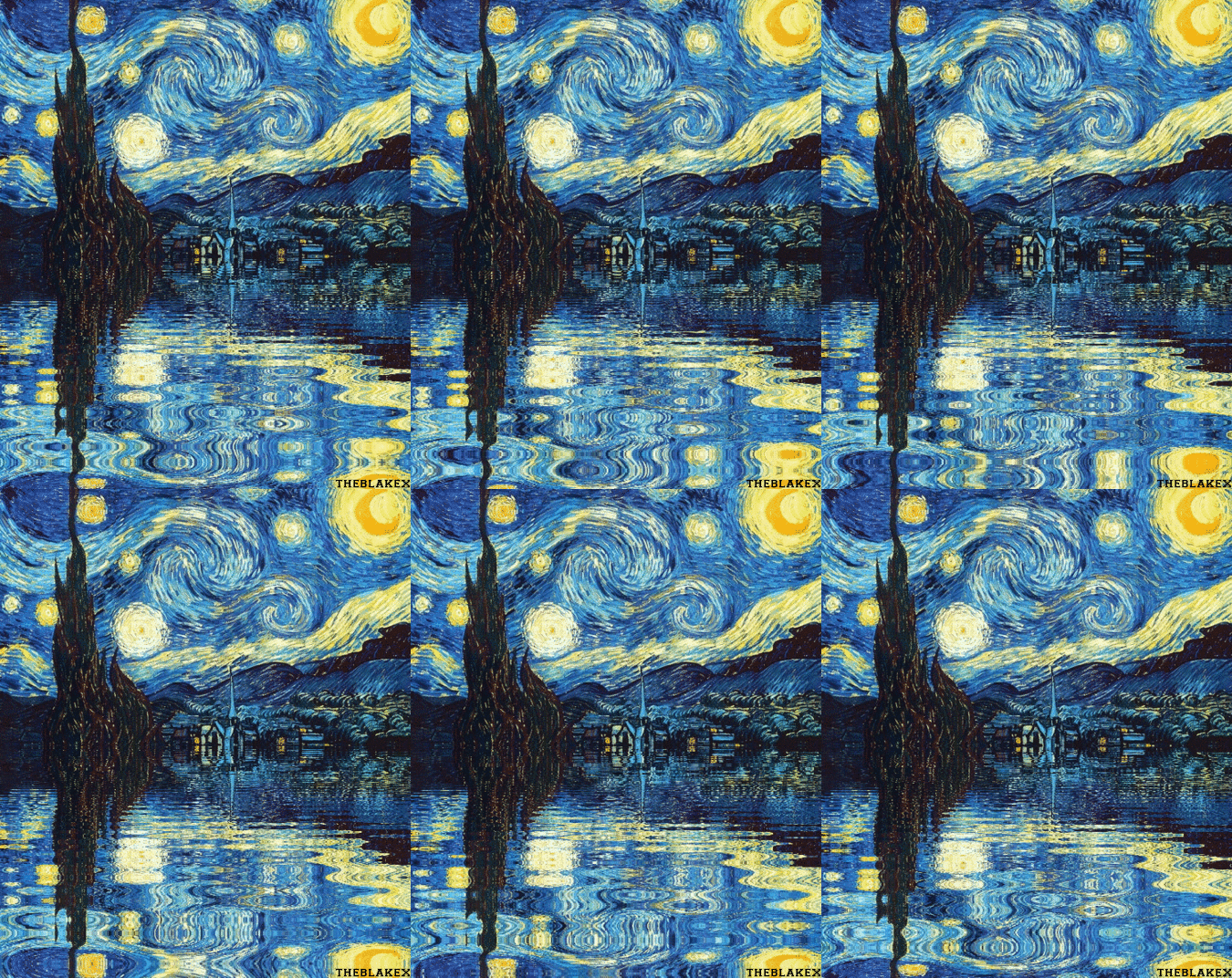
The article "What Is Post-Internet Art? Understanding the Revolutionary New Art Movement" talks about the artist Laric. He invites other people to remix, reuse, and reappropriate his artwork. This is something that wouldn’t be available without the internet and digital art. Van Gogh could ask people to remix Starry Night, but then he would lose the integrity of the original image. With the internet, you can make infinite copies and remixes of an artwork all while leaving the original artwork intact. The one unfortunate thing about internet art which I hadn’t previously considered is the fragility of it. If the internet goes down, or if we lose access to it, then all of these artworks will be gone forever. They may have a more vibrant life while they exist, but their versatility also makes them impossible to recreate and save in real life, AFK.
"Postinternet: Art After the Internet" brings up some great points about diversity in the artworld. The author discusses a talk she attended by two prominent internet artists. Only one woman was featured on the panel. The artists claimed that this was because the audience created the roster for the panel and selected mostly men, since these are the more famous artists. The internet gives a voice to women and minorities and allows them to make a name for themselves without the approval of men. People can learn more about these artists, be exposed to their work and their motivations, artists who previously never would have been allowed to succeed. This is one of the best things about the internet.